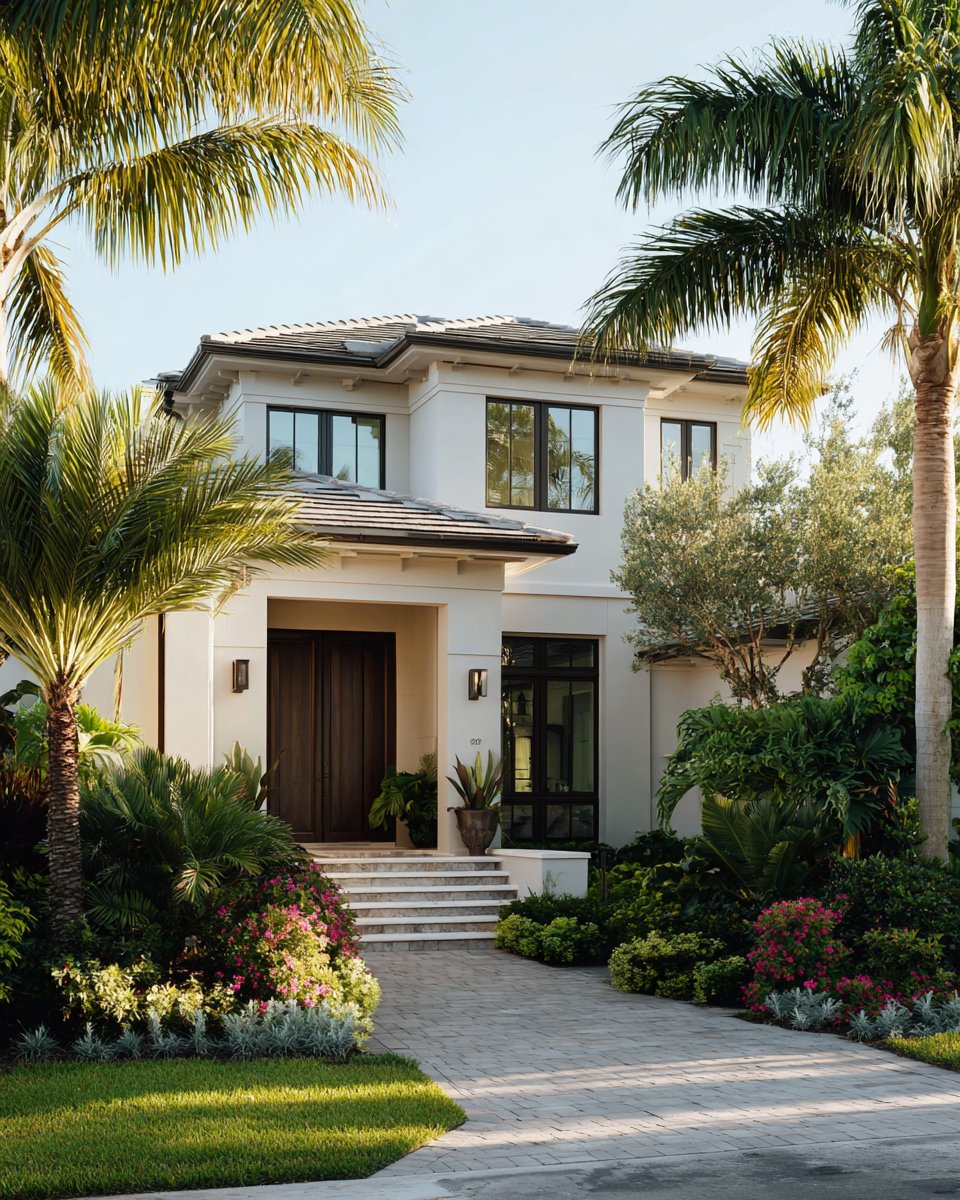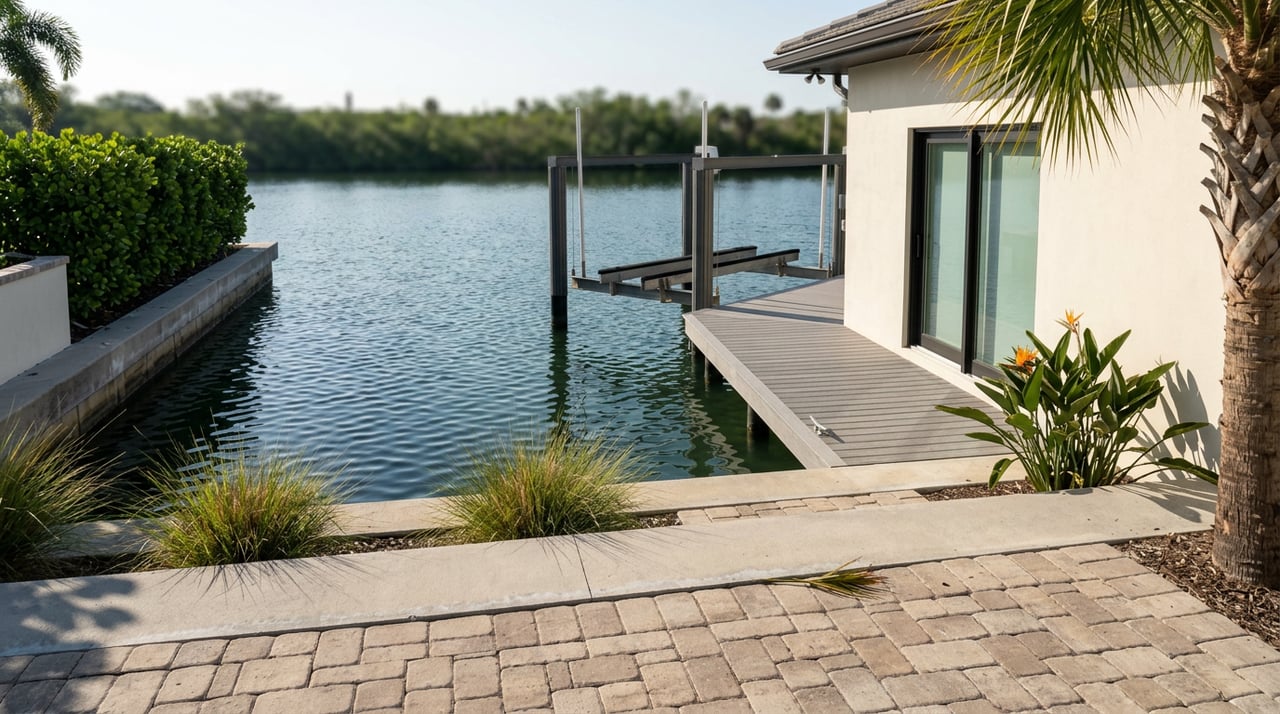
Picture two canal-front listings a block apart in Bird Bay. One has a seawall that's been standing since the Reagan administration, its cap chalky, a hairline crack running along one panel. The other has a seawall so new the concrete still looks bright, finished a few months before the sign went in the yard. Most buyers walk toward the second house and relax. The seller did the work. The problem is solved.
That instinct is backwards more often than people expect on Venice's canals, and the reason has nothing to do with how well the new wall was built.
What a Standard Inspection Actually Skips
A home inspector walking a canal-front property in Venice will look at the seawall from the yard. They'll note if it's leaning, cracked, or has standing water pooling at the base after a normal high tide. What they won't do is get in the water, because evaluating a seawall below the waterline requires specialized equipment and training most general home inspectors don't carry, and Florida's inspection industry treats that gap as standard practice, not a shortcut.
That means the visual, above-water impression a buyer gets during a standard inspection tells them almost nothing about the tiebacks, the deadman anchors, or the soil conditions doing the actual work of holding the wall in place. A Florida-licensed structural engineer is the one who produces a sealed report on those components, and depending on scope, that report runs anywhere from around $300 for a documented visual assessment up to $3,000 for a comprehensive report that includes a diver checking conditions below the waterline. A full seawall replacement, if it comes to that, runs roughly $800 to $1,000 per linear foot, which turns a 100-foot canal lot into a six-figure line item.
None of that shows up on a standard four-point inspection either, which is the other report buyers hear about and often confuse with a seawall check. A four-point inspection looks at exactly four systems: roof, electrical, plumbing, and HVAC. It has nothing to do with anything below the dock.
| Step | Who does it | What it actually checks | Typical cost |
|---|---|---|---|
| Standard home inspection | Licensed home inspector | Visible house systems; seawall glanced at from the yard, not diagnosed | Included in inspection fee |
| Engineer's seawall report | Florida-licensed structural engineer | Cap, panels, tiebacks, soil loss, and below-waterline conditions if a diver is included | $300 to $3,000 depending on scope |
| Four-point insurance inspection | Licensed inspector, insurance-focused | Roof, electrical, plumbing, HVAC only | $75 to $150 |
The 90-Day Window Sellers Don't Mention
Here's where the newer wall starts working against the buyer instead of for them.
Florida gives contractors and suppliers up to 90 days after finishing work to record a lien against a property if they weren't paid in full. That protection exists for legitimate reasons, but it means a seawall or dock job finished in April can still generate a legal claim showing up in a title search in June, even if the homeowner wrote a full check to the general contractor the day the crew packed up. If that contractor didn't pass payment down to a subcontractor or a materials supplier, the property owner often has no idea a problem exists until the title company flags it, sometimes with a closing date already on the calendar.
A seawall that was rebuilt in the spring can carry a paid invoice's evil twin: an unpaid subcontractor with a legal claim recorded months later, attached to a house that's already under contract.
This is why the freshest seawall on a canal-front listing deserves more scrutiny at the title level, not less. Age tells a buyer almost nothing about lien exposure. Recency tells them exactly where to look.
Why Bird Bay, Capri Isles, and Waterford See So Much Fresh Work
This isn't a hypothetical risk scattered thinly across the market. Venice's canal neighborhoods, Bird Bay, Capri Isles, and Waterford among them, sit on saltwater canals with moderate water depths and lower wave energy, conditions that make vinyl sheet pile seawalls a common choice for repair and replacement work. Roberts Bay's tidal fluctuations and storm surge risk along the Intracoastal mean these walls take real wear over time, and marine contractors working the area point to November through May as the preferred construction window, since lower water levels make the work easier and scheduling before hurricane season starts in June gives a new wall time to cure before it's tested.
That building calendar overlaps almost exactly with the season when Venice listings pick up. A seawall finished in March or April to beat hurricane season is still well inside its 90-day lien window when a home hits the market in early summer, which means a meaningful share of the "recently repaired" canal-front inventory in these neighborhoods carries this exposure at the exact moment buyers are writing offers.
The Insurance Clock Runs on a Separate Calendar
Even a canal-front home with a spotless seawall and a clean title still has to clear insurance underwriting, and that clock runs on age, not water access. Most Florida carriers require a four-point inspection once a home hits 30 years old, though that threshold has some give this year: several carriers have pushed the requirement back to 25 or 30 years, and some are now writing older roofs with actual cash value endorsements instead of declining coverage outright. A home built before 1989 is the rough marker where insurers stop asking questions and start requiring documentation.
None of this touches the seawall. It's a parallel process, and buyers who assume a clean four-point inspection means the whole waterfront picture is settled are conflating two systems that don't talk to each other.
The current market gives buyers more room to insist on both. Venice's median sale price sat around $409,000 over the three months ending in June 2026, with homes taking roughly 66 days to go under contract, a slower pace than the tighter markets of a few years back. Sarasota County had nearly 4,850 Citizens Property Insurance policies in force as of April 2026, a reminder of how many local homeowners are relying on the state-backed insurer rather than the open market. With more inventory and less urgency on offers, a buyer asking for an engineer's seawall report and a fresh title search as contract contingencies isn't the outlier they might have been in a faster market. It's a reasonable ask that sellers in this environment are more likely to accommodate.
What This Looks Like at the Closing Table
For buyers under contract on a canal-front home:
- Ask when the seawall or dock was last worked on, and get the answer in writing, not just verbally at showing.
- If any work happened in the last 90 days, request lien waivers from every subcontractor involved, not just a receipt from the general contractor.
- Order the title search early enough that a late-surfacing lien doesn't collide with a closing date and a rate lock.
- Treat a visual seawall glance from the home inspector as a starting point, not a conclusion, especially if the wall's age or condition is in question.
For sellers preparing to list:
- Collect final lien waivers from every contractor and subcontractor who touched the seawall, dock, or roof, even months after the invoice is paid.
- Have that documentation ready before the listing goes live rather than scrambling once an offer is in hand.
- If the home is nearing 25 to 30 years old, get the four-point and wind mitigation inspections done ahead of time so financing isn't the reason a buyer walks.
None of this requires assuming bad faith on anyone's part. Most sellers who repair a seawall are doing exactly what a responsible owner should do. The paperwork trail just needs to catch up to the good intention before the closing date does.
A Few Questions Worth Asking Early
Does a standard home inspection cover the seawall? It covers what's visible above the waterline from the yard. It does not include a structural evaluation of tiebacks, anchors, or below-water conditions, which is the job of a Florida-licensed structural engineer.
How old does a Venice home have to be before insurers require a four-point inspection? Most carriers set the line around 30 years, though that threshold has loosened somewhat this year, with some insurers now accepting 25 to 30 years or offering limited coverage on older roofs instead of a flat decline.
If a lien shows up during title search, does that kill the deal? Not necessarily. It usually means a delay while the lien is paid, bonded off, or settled between the parties, which is exactly why finding it early, before a closing date is locked in, matters more than finding it late.
If you're weighing a canal-front purchase or getting ready to list one in Venice, Sabina Kirchherr can walk through what a specific seawall, title, and insurance picture looks like for your address before you're staring down a closing deadline. Let's Connect.